Board-Certified
Pediatric Dentists
Can Early Orthodontic Treatment Help Fix Speech Problems in Children?


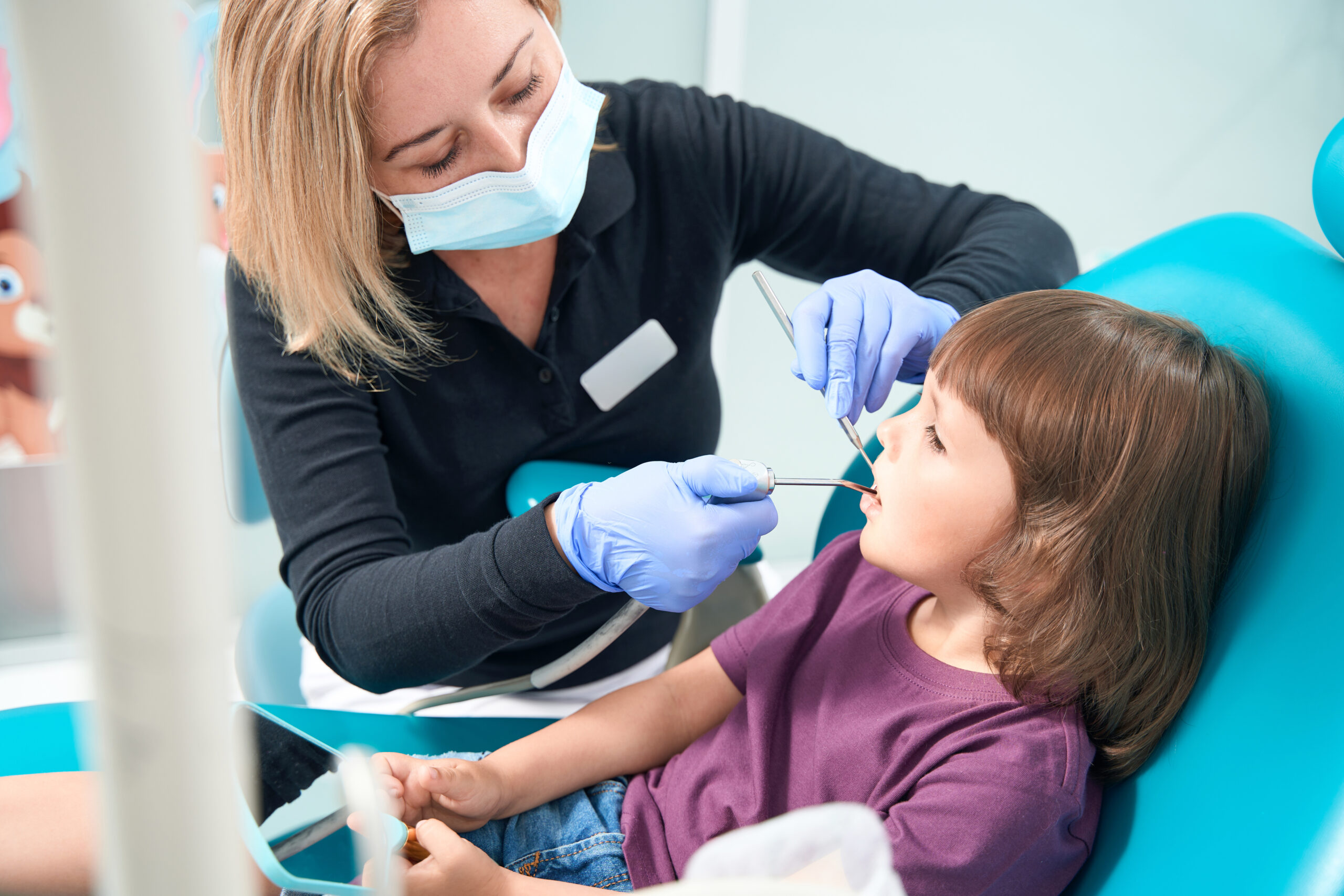
If your child is struggling to pronounce certain sounds, you might wonder whether it’s just a phase — or something more. Many parents are surprised to learn that speech problems in children are often closely connected to the alignment of their teeth and jaw. The good news is that early orthodontic treatment for speech problems can make a real, lasting difference in your child’s communication, confidence, and overall development.
As a trusted pediatric orthodontist serving families across Englewood, we see children every day whose speech challenges have a clear dental cause. Understanding the connection between oral structure and language development is the first step toward finding the right solution for your child.
How Teeth and Jaw Alignment Affect Speech Development
Speech is a highly physical process. Your child uses their lips, tongue, teeth, and the roof of the mouth together to form sounds. When the teeth or jaw are misaligned, it disrupts the airflow and tongue positioning required to produce clear speech.
For example, a child with an open bite — where the upper and lower teeth don’t meet properly — may struggle with sounds like “s,” “z,” and “th.” A tongue thrust, often associated with an open bite or low muscle tone, can cause persistent lisping that speech therapy alone may not fully correct.
When a pediatric orthodontist evaluates your child early, they can identify structural issues that may be silently affecting speech — and create a treatment plan to correct them before they become harder to address.
Common Speech Problems Linked to Orthodontic Issues
Not all speech difficulties stem from dental problems, but orthodontic issues are a more common cause than many parents realize. Here are some of the most common connections between speech problems in children’s teeth and bite:
- Lisping – Often caused by an open bite, gaps between teeth, or a tongue thrust habit. Air escapes between the teeth, distorting “s” and “z” sounds.
- Difficulty with “t,” “d,” and “n” sounds – These require the tongue to touch the upper front teeth or the ridge just behind them. Crowding or misalignment can block this contact.
- Slurred speech – A misaligned jaw (underbite or overbite) can affect the clarity and rhythm of spoken words.
- Mouth breathing – A narrow palate can force a child to breathe through the mouth, affecting tongue posture and speech quality.
- Whistling sounds – Gaps or spacing issues can cause air to escape abnormally, producing a whistling noise during speech.
Signs Parents Should Watch For
Children develop speech at different rates, but there are specific red flags that may indicate an orthodontic evaluation is warranted. Watch for these warning signs:
- Your child is 5 or older and still has a noticeable lisp
- Teachers or family members frequently ask your child to repeat themselves
- Your child avoids speaking in social situations or shows frustration when talking
- You notice your child breathes through their mouth regularly
- There is visible crowding, spacing, or an overbite/underbite in your child’s teeth
- Your child has received speech therapy but has not made expected progress
If any of these signs sound familiar, it’s worth scheduling an evaluation with a pediatric orthodontist who can assess whether a dental structural issue is contributing.
How Early Orthodontic Treatment Can Help
Early orthodontics for kids — also called Phase 1 orthodontic treatment — typically begins between ages 6 and 10, while the jaw is still growing and highly responsive to gentle guidance.
This window of opportunity allows orthodontists to:
- Expand a narrow palate to create proper space for the tongue and teeth
- Correct a tongue thrust pattern before it becomes a deeply ingrained habit
- Guide jaw growth to prevent or reduce an overbite, underbite, or crossbite
- Create space for permanent teeth to erupt in better alignment
- Reduce the need for extractions or complex treatment later in adolescence
It is important to note that early orthodontic treatment works best as a complement to speech therapy, not a replacement. When both are addressed together, many children experience significantly faster and more lasting improvements in their speech.
Benefits of Early Orthodontics for Kids
Beyond speech improvements, children orthodontic treatment at a young age delivers a wide range of benefits that extend well into adulthood:
- Improved self-confidence – Children who speak and smile more clearly tend to thrive socially and academically
- Better oral hygiene – Straight teeth are easier to clean, reducing the risk of cavities and gum disease
- Improved chewing and digestion – A properly aligned bite means food is chewed more efficiently
- Reduced jaw pain – Correcting bite issues early can prevent TMJ problems down the road
- Simplified future treatment – Early intervention often makes Phase 2 (braces or aligners) shorter and less complex
When Should Children See a Pediatric Orthodontist?
The American Association of Orthodontists recommends that children receive their first orthodontic evaluation by age 7. At this point, a mix of baby and permanent teeth are present, making it the ideal time to identify emerging bite or alignment issues.
However, if your child is showing signs of a speech problem related to teeth alignment, you don’t need to wait. Children as young as 4 to 5 years old can benefit from a preliminary evaluation, especially if speech difficulties are present.
For families in Englewood and the surrounding areas, our practice provides thorough, compassionate early evaluations tailored specifically to young patients and their parents.
Frequently Asked Questions From Parents
Can braces fix speech problems in children?
Yes, in many cases. While braces are primarily designed to straighten teeth and correct bite alignment, doing so can significantly improve speech clarity. When an open bite, crowding, or misalignment is corrected with braces or other orthodontic appliances, the physical barriers affecting your child’s speech are removed. However, braces work best for speech when combined with speech therapy guided by a licensed speech-language pathologist.
What age is best to start orthodontic treatment for speech problems?
Early evaluation is recommended starting around age 6 to 7, but a visit can happen earlier if concerns arise. The earlier a structural issue is identified, the more treatment options are available while the jaw is still developing. Most early orthodontic treatment for speech problems begins between ages 6 and 10.
Is early orthodontic treatment painful for children?
Most children tolerate early orthodontic appliances very well. There may be mild soreness or pressure during the first few days of a new appliance, but this typically subsides quickly. Our team in Englewood takes a gentle, child-friendly approach to ensure every visit is as comfortable and positive as possible.
Should I see a speech therapist or an orthodontist first?
Ideally, both. We recommend scheduling consultations with a speech-language pathologist and a pediatric orthodontist simultaneously when a speech problem is present. Speech therapists identify how sounds are being produced incorrectly, while orthodontists identify structural causes. Together, this team approach leads to the most effective outcomes.
What orthodontic appliances are used for speech-related issues?
Depending on the underlying cause, a pediatric orthodontist may recommend a palate expander to widen a narrow arch, a habit appliance to deter tongue thrusting, partial braces to correct tooth positioning, or functional appliances to guide jaw growth. Each treatment plan is customized to the child’s specific needs.
Helping Families in Englewood Find the Right Care
If you’re searching for an orthodontist for kids in Englewood, you’re already taking the right step. Our practice is proud to serve the Englewood community with specialized early orthodontic care designed to meet children where they are — developmentally, emotionally, and medically.
We understand that as a parent, watching your child struggle with speech can feel stressful and uncertain. Our team takes a thorough, evidence-based approach to evaluation, explaining every step of the process in clear, straightforward language. We work collaboratively with speech therapists, pediatricians, and other specialists to ensure your child receives well-rounded, coordinated care.
Our goal is simple: to give every child in Englewood the healthy smile, clear speech, and confident voice they deserve.
Give Your Child’s Voice the Support It Deserves
Speech challenges can affect more than communication—they can impact your child’s confidence and social development. The good news is that early orthodontic treatment for speech problems can often help when addressed at the right time. Between ages 4 and 12, your child’s teeth and jaw are still developing, making it an ideal stage to correct alignment issues that may be affecting speech. If you’re concerned about your child’s pronunciation, bite, or crooked teeth, a consultation with a pediatric orthodontist in Englewood can provide clear answers and treatment options. Schedule an appointment today to give your child the support they need for clearer speech and a confident smile.
Related Articles
New Patients & Emergency Appointments Welcome!
