Board-Certified
Pediatric Dentists
What Types of Orthodontic Problems Can Children Experience?


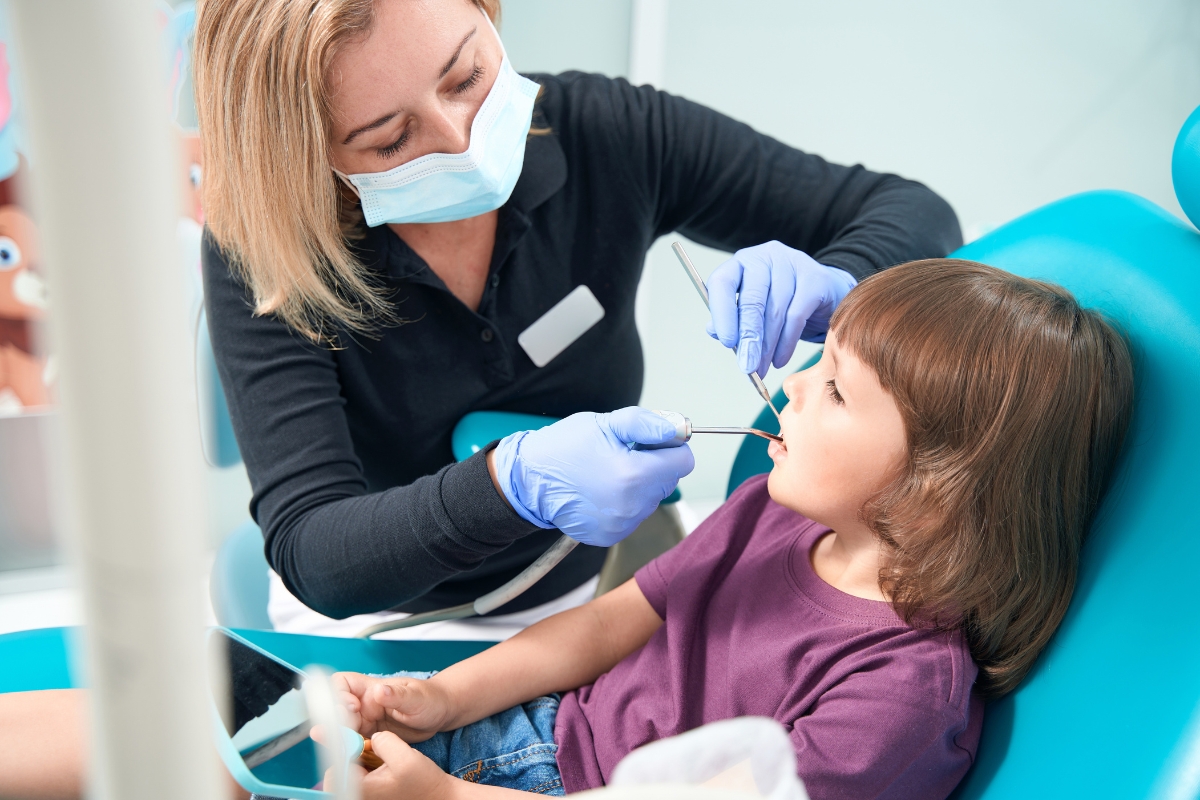
As a parent, you want the best for your child’s health and that includes their smile. But did you know that many orthodontic issues in kids begin developing long before the teenage years? In fact, some alignment and bite problems are already taking shape in toddlers and early school-age children. The good news? Catching them early can mean simpler, faster, and more effective treatment down the road.
This guide walks you through the most common orthodontic problems children experience, what causes them, and when it’s time to speak with a specialist.
Why Early Detection of Orthodontic Issues in Kids Matters
The American Association of Orthodontists recommends that children have their first orthodontic evaluation by age 7. At this point, enough permanent teeth have emerged to give a clear picture of how the jaw and bite are developing.
Early evaluation doesn’t always mean early treatment but it does mean your child’s dental team can monitor development and act at exactly the right time.
Left untreated, childhood orthodontic problems can lead to:
- Difficulty chewing or speaking
- Increased risk of tooth decay and gum disease
- Jaw pain or dysfunction as they grow
- Lower self-confidence related to their smile
The Most Common Orthodontic Problems in Children
1. Crowding
Crowding is one of the most frequently seen orthodontic issues in kids. It occurs when there simply isn’t enough space in the jaw for all the permanent teeth to emerge properly. Teeth may twist, overlap, or be pushed out of position.
Crowding can begin to show as early as age 6 or 7 when permanent molars and incisors start coming in. An orthodontist can assess whether early intervention such as a palate expander might help create room before more teeth arrive.
2. Overbite
An overbite happens when the upper front teeth overlap significantly over the lower front teeth. A small degree of overlap is normal, but a deep overbite can put excessive pressure on the lower teeth and jaw joints.
Children with deep overbites may also experience worn enamel, jaw discomfort, or difficulty biting into certain foods. This is one of those orthodontic issues in kids that responds particularly well to early treatment while the jaw is still growing.
3. Underbite
An underbite is the opposite of an overbite the lower teeth sit in front of the upper teeth when the mouth is closed. This can give the appearance of a “jutting” lower jaw and often has both dental and skeletal causes.
Addressing an underbite early, while the jaw bones are still developing, can sometimes prevent the need for surgical correction later in life.
4. Crossbite
A crossbite occurs when some of the upper teeth sit inside the lower teeth rather than outside them. This can affect just one or two teeth (posterior crossbite) or involve the front teeth (anterior crossbite).
If left untreated, crossbites can cause:
- Uneven jaw growth
- Asymmetry in the face
- Wearing down of tooth enamel
- Discomfort when chewing
Palate expanders and other appliances used early in childhood are highly effective at correcting crossbites.
5. Open Bite
An open bite means there is a gap between the upper and lower teeth even when the mouth is fully closed. The front teeth are most commonly affected, making it difficult for children to bite through foods like sandwiches or apples.
Open bites in children are frequently linked to prolonged thumb-sucking or pacifier use beyond age 3–4, though tongue posture and genetics also play a role.
6. Spacing Issues
While crowding is about too little space, spacing problems occur when there is too much. Gaps between teeth can result from missing teeth, teeth that are too small for the jaw, or habits like tongue thrusting.
Spacing issues can sometimes affect speech development and may leave gums more vulnerable to irritation and injury.
7. Protruding Front Teeth (“Buck Teeth”)
Protruding upper front teeth often called “buck teeth” are among the most visible orthodontic issues in kids. Beyond the cosmetic concern, protruding teeth are more susceptible to chipping and injury, particularly in active children who play sports.
This condition is often related to habits like thumb-sucking or pacifier use, but can also be genetic in origin.
8. Missing or Extra Teeth
Some children are born without certain permanent teeth (hypodontia), while others develop extra teeth (hyperdontia or supernumerary teeth) that can block normal eruption patterns.
Both situations require careful monitoring and often early orthodontic planning to ensure space is managed correctly as the child grows.
Habits That Can Worsen Orthodontic Problems
Certain childhood habits, if prolonged, can contribute to or worsen developing orthodontic issues:
- Thumb-sucking beyond age 4–5
- Prolonged pacifier use past age 2–3
- Mouth breathing, often linked to allergies or enlarged tonsils
- Tongue thrusting, where the tongue pushes forward against the teeth when swallowing
Addressing these habits early with the help of a pediatric dentist or orthodontist can reduce their long-term impact on your child’s bite and tooth alignment.
When Should You Bring Your Child In?
Even if you don’t notice obvious orthodontic issues in kids, an early screening is valuable. That said, certain signs suggest it’s time to schedule a consultation sooner rather than later:
- Early or late loss of baby teeth (before age 5 or after age 13)
- Difficulty chewing or biting
- Mouth breathing or snoring
- Teeth that appear crowded, misplaced, or blocked out
- Jaws that shift, pop, or make sounds
- Your child biting the cheek or roof of the mouth frequently
Conclusion: Give Your Child a Head Start on a Healthy Smile
Orthodontic problems in children are more common than many parents realize and more treatable when caught early. Whether it’s crowding, a crossbite, or a persistent thumb-sucking habit affecting tooth alignment, early evaluation puts you in the best possible position to help your child.
At Rocky Mountain Kids Dentistry in Englewood, CO, our team is experienced in identifying and monitoring orthodontic development in children of all ages. We make evaluations stress-free and kid-friendly, so your child feels comfortable from the very first visit.
Schedule your appointment today and give your child’s smile the attention it deserves early intervention can make all the difference.
Questions Parents Often Ask About Kids’ Orthodontic Health
My child still has baby teeth. Is it too early to worry about orthodontic problems?
Not at all. Many orthodontic issues are visible and assessable while baby teeth are still present. In fact, age 7 is the recommended age for a first screening. Early evaluation allows your dentist to track development and plan ahead even if active treatment isn’t needed yet.
Does my child definitely need braces if we come in for an evaluation?
An evaluation is simply an assessment, not a commitment to treatment. Many children are monitored over time before any treatment begins. The goal is to understand how your child’s teeth and jaw are developing so that if and when treatment is needed, it happens at the right time.
Can orthodontic problems affect my child’s speech?
Yes, certain alignment issues like open bites, spacing problems, or a significant overbite can influence how a child forms certain sounds. In many cases, correcting the orthodontic issue improves speech clarity as well.
Is thumb-sucking really harmful to my child’s teeth?
Thumb-sucking is a natural comfort habit for young children and usually harmless before age 4. However, if it continues beyond age 5–6 as permanent teeth are emerging, it can push the front teeth outward and affect jaw development. If you’re concerned about the habit, our team can offer gentle strategies to help.
What’s the difference between seeing a pediatric dentist and an orthodontist for these issues?
Pediatric dentists are trained to identify early signs of orthodontic problems during routine check-ups and can refer you to an orthodontist when needed. Some practices, including ours, offer integrated care so that monitoring and treatment are well-coordinated from the start.

New Patients & Emergency Appointments Welcome!
